Why did I like Jane Schoenbrun’s love letter to slashers so much, even though I can’t co-sign it?
© Mubi
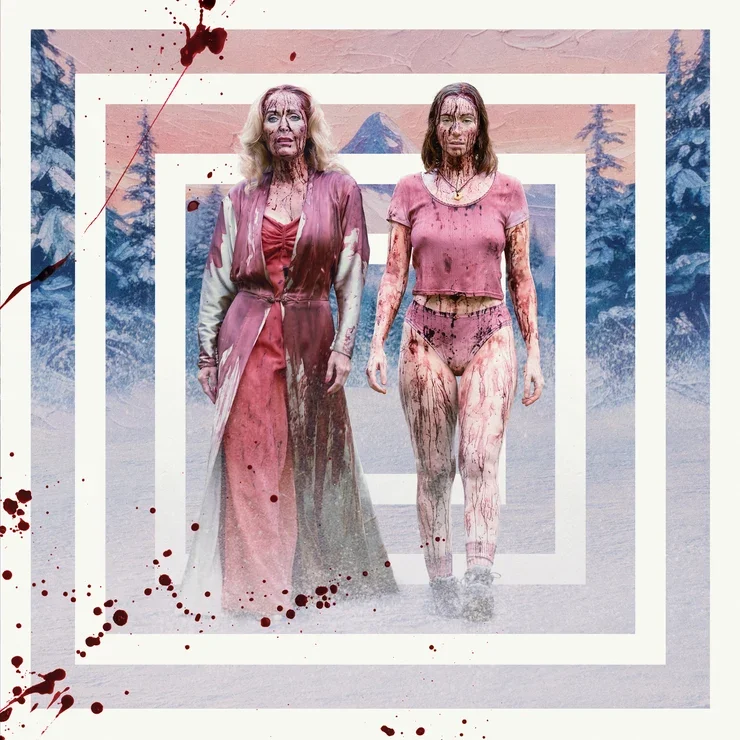
Earlier this year, I walked out of seeing Teenage Sex and Death at Camp Miasma at the Phoenix Cinema in Leicester, a big smile on my face, thinking how much I loved the style, cinematography, story, performances, music, and many other aspects of it. Despite this appreciation, what I can’t honestly say that I share is writer and director Jane Schoenbrun’s formative love of slasher horror, which is the thematic core of the film.
I’ve been a fan of the wider horror genre for almost as long as I’ve loved movies. The first blockbuster I became obsessed with was Jurassic Park, the T-Rex and Velociraptors frightening me in a way that was much more addictive than upsetting. A little later, my mom introduced me to The Haunting (1963), the beginning of my penchant for a big, scary house flick. Then, still as a young child, with my grandma half asleep on the sofa and barely aware of what I was being allowed to watch, I experienced Aliens (1986).
This was probably the first time I was truly terrified by a film, and the image of Ripley taking on the xenomorph queen has lived on a pedestal in my brain ever since. Though typically identified as a sci-fi/action movie, Aliens was my introduction into a handful of slasher movie tropes, and, having been utterly thrilled by James Cameron’s sequel, it was not long before I was able to watch Alien (1979). Widely regarded as a masterpiece, Alien remains one of my all-time favourites of both the sci-fi and horror genres, and I recently put it in my top 10 films of all time.
“Within a slasher, I can experience the dread, the adrenaline and the tension without the need for self-protection. I can surrender to it fully, and there’s something beautiful in that freedom.”
Yet, growing up through the 1990s and 2000s, when slasher franchise releases were ubiquitous (Halloween, Friday the 13th, Scream, etc.), this was a sub-genre with which I would engage but never be enamoured. Yes, Scream or Freddy vs Jason would be a titillating choice for a teenage sleepover, but these movies did far less for me than Ripley facing off against the xenomorph. It was entertaining to react viscerally to the blood and gore effects, but I had relatively little interest in the killer or the kills.
So, why have I kept coming back to slasher movies through the years? That question can be answered to a certain extent by the simple idea that a good (horror) film is a good (horror) film (and the bad ones can be a painful borefest). If, for example, In a Violent Nature is positively reviewed and enthusiastically recommended, the cinephile in me will, with mild reluctance due to the sub-genre, get to the cinema to see it. Such a movie will rarely be among my favourites of the year, but I very often have a good time. Something draws me in every time.
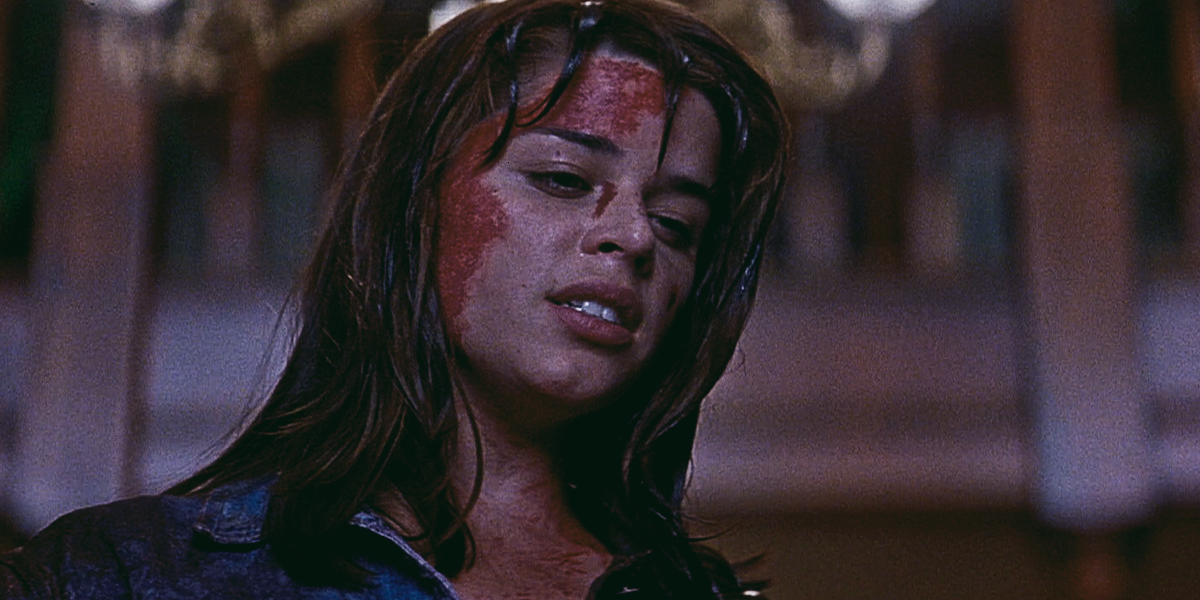
Perhaps the mystery component has been right in front of me the whole time, and it looks a lot like Sigourney Weaver’s Ellen Ripley. When I asked Ashley Thomas, podcaster and author of The Nerdy Blogger, she explained that slashers are her favourite type of horror film, “not necessarily for the villain, but because of the strength of character they typically bring out in their Final Girl”. She highlighted her emotional connection to Laurie Strode (Halloween) and Sidney Prescott (Scream) and how she is inspired by their courage and intelligence to overcome both danger and trauma.
© Miramax Films
The term ‘Final Girl’ was introduced by Carol J. Clover in her 1987 essay Her Body, Himself: Gender in the Slasher Film. Clover contrasts slasher antecedent Psycho (1960) with seminal 1970s works such as The Texas Chain Saw Massacre (1974) and Halloween (1978), the genre-defining distinction being the addition of the Final Girl. Echoing Ashley’s thoughts, Clover reflects that the Final Girl’s “will to survive is astonishing” and that “she alone looks death in the face”, with the rest of her group perishing at the hands of the villain.
One of Clover’s particularly apposite descriptions of the Final Girl is that she “is abject terror personified”. This resonates with what Emma Arneil, host of the excellent The Horror And Her podcast, told me about her own slasher fandom: “My love of slashers is rooted in fear, but fear that I control. A fear that comes from the safety of a film, rather than the fear of having to be constantly aware, vigilant or follow the rules imposed on women. Within a slasher, I can experience the dread, the adrenaline and the tension without the need for self-protection. I can surrender to it fully, and there’s something beautiful in that freedom.”
Growing up as a boy in a very small and safe town, I was possibly not able to fully relate to this underpinning facet of the slasher movie experience. As I’ve got older and further understood different types of fear and the female experience (there are also pertinent non-binary and transgender interpretations of course), my appreciation for the Final Girl has blossomed, and my initial attachment to Ellen Ripley makes perfect sense. It is interesting that Clover challenges a traditional view of predominantly male audiences identifying with a male killer committing awful acts of violence against women, countering that these same audiences “switch sympathies” as the film progresses and passionately root for the Final Girl in the climax.
To finish where we started, Teenage Sex and Death at Camp Miasma fulfils both answers posed here: a technically brilliant film and also one with a joyous and unashamed celebration of the Final Girl, one who, in the film’s climax, rapturously runs through Camp Tivoli screaming in her underwear. Schoenbrun understands, as argued in Clover’s essay, that a large part of the art of horror is the art of rendition, paying reverent homage to one’s predecessors. Though I didn’t fall in love with slasher movies at a young age, Schoenbrun’s film has helped me to understand how I’ve arrived there the long way round.
Sam Stokes is the host of Den of Ten and a co-host of Academy Watch, both podcasts which are available through Punch & Pie Media.