Citizen Kane: The Importance of Learning from Trauma
© RKO Radio Pictures
Heavy lies the crown. Does Citizen Kane live up to its enormous reputation all these years down the track? We continue our series reviewing the Sight and Sound Top 100.
As a millennial interested in cinema from all time periods, one of the biggest resistances my peers seem to have regarding cinema from the past is on the question of how relevant all those old, fuddy-duddy films are. Those old black and white films with comparatively dodgy sound design and melodramatic acting and orchestral musical scores can sure be off-putting. And what can a film from 1941 really tell us about the human condition in 2026?
If you haven’t seen Kane yet, the search for Rosebud at the centre of this film has probably been spoiled if you are somewhat attuned to cinema history. For me, it happened when I was a teenager watching Family Guy. While Peter tried to save us from “2, long, boob-less hours”, it didn’t stop me from seeking out The Greatest Movie Ever Made, as its reputation dictated. Kane regularly sits at the apex, or near enough, of any film list of repute; speaking to the quality of the film, the influence of its technique and the ineffable ‘lightning in a bottle’ moment it captures right at the vanguard of one of cinema’s most enigmatic careers.
“That Welles wouldn’t touch these heights again is not surprising, but the fact that he came close with later projects is a minor-miracle.”
It sits at number 3 on the latest iteration of the Sight and Sound Poll, but for 5 decades straight it was at the very top. A story of a boy who grew up with obscene wealth, who grows into a brash and stubborn man who finds it difficult to make and maintain friendships and relationships, who has political ambitions, and then uses his massive media network to shape the world as he sees fit, while he festers away in a castle, his reputation in tatters after years of the bizarre and abusive behaviour a megalomaniac like him typically displays. I mean, what can a film from 1941 really tell us about the human condition in 2026?
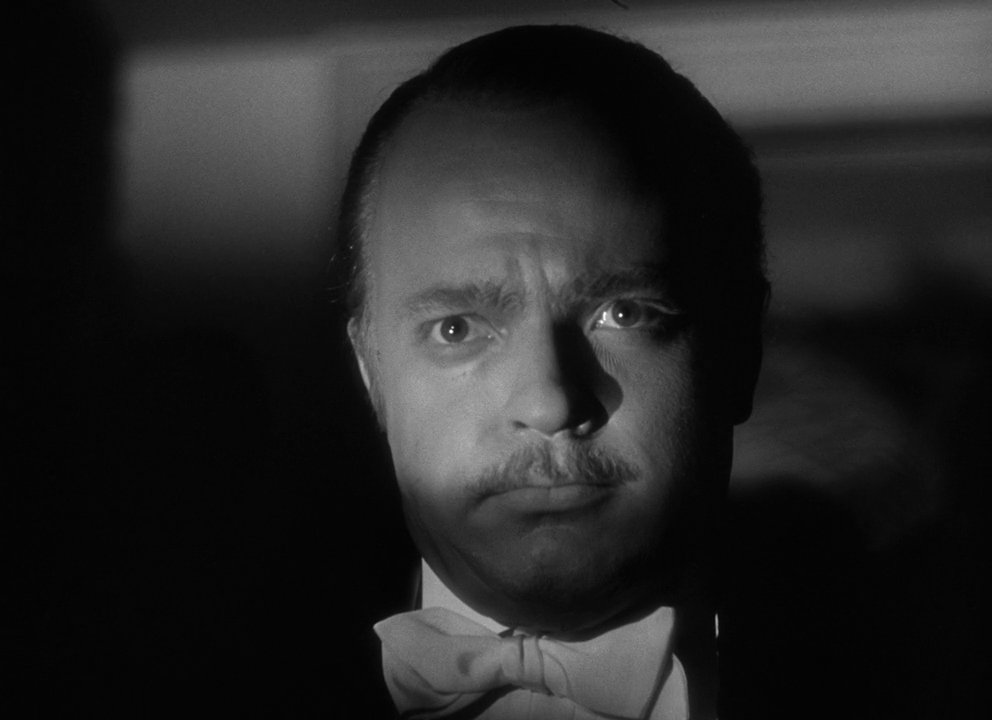
Of course, it’s not really about Rosebud. Charles Foster Kane, as played by the 24-year-old co-writer and director Orson Welles, is a cautionary tale personified; warning of the trappings of money and the lust for power that can become all-consuming. Let’s pause there for a moment. 24 Years Old?! That Welles wouldn’t touch these heights again is not surprising, but the fact that he came close with later projects is a minor-miracle.
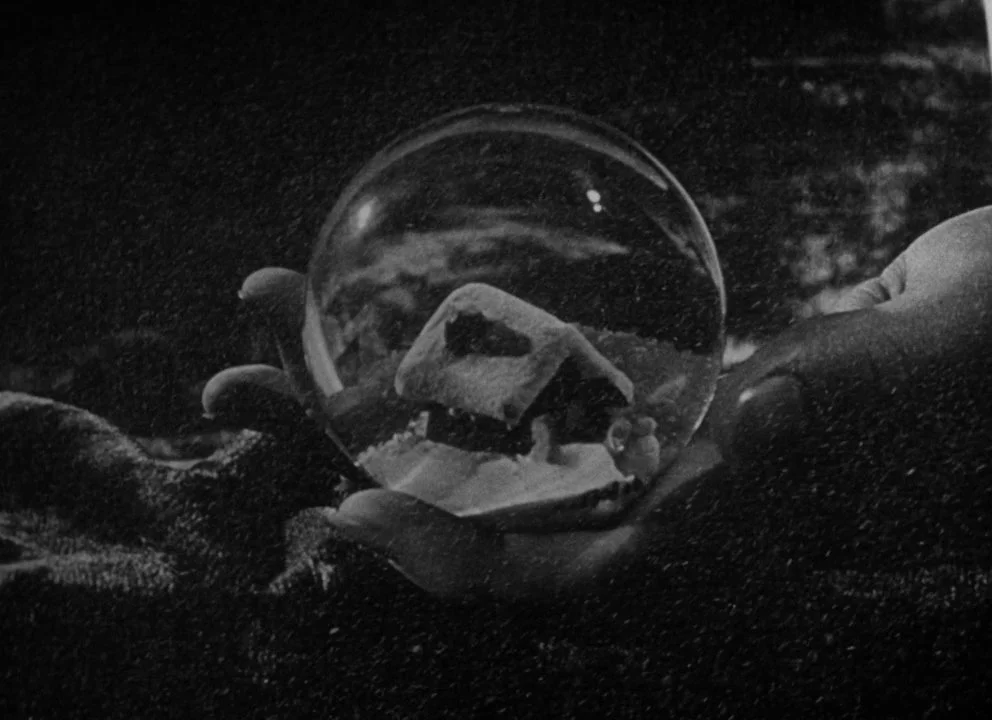
At the end of his life, Charles Foster Kane is dying in his far too large bedroom in his far too large bed. The only people with him in his formerly opulent palace are his staff. He holds a snow globe. With his last moment of strength he whispers the word ‘Rosebud’, drops the snow globe and slips away to his death. Kane was a man the whole world knew of, but whose inner workings were a mystery to most. What motivated a man to act the way he did? And what was Rosebud? Perhaps the answers to all of the questions around him were in that one word; or so thinks a reporter who spends the duration of the film travelling the country to talk with the people who knew Kane best, revealing to the audience who Kane was one flashback at a time.
© RKO Radio Pictures
Like Welles’ career came to mirror, searching for the heights of Citizen Kane one more time; Citizen Kane is ultimately about searching. As the reporter searches for the meaning of Rosebud, Kane searches for love.
We observe a young boy shipped away by his mother to learn how to live with the enormous sum of money he is to inherit one day, in doing so his mother clearly has chosen to prioritise money above nurture. That young boy will never see his parents again. He spends the rest of the movie trying to make people like him, and as he throws more money at them, the more he pushes them away. Eventually, he dies alone (except for the presence of the people who are paid to be with him).
In short, Kane is a loser. He lost everything except his possessions. He’s a rich loser who acted in a ridiculous way, using people around him as pawns to fulfil his desires and then wondered why his wealth didn’t bail him out. But who can blame him? How was he supposed to know any better? He was just a kid when he was essentially given a golden handshake by his mother. He lost his mother, his father, all of his worldly possessions which would come to represent a time that he longs for throughout the rest of his miserable life.
This is a popular reading of the film, but I do take issue with one part of it. What do you mean we can’t blame him?
© RKO Radio Pictures
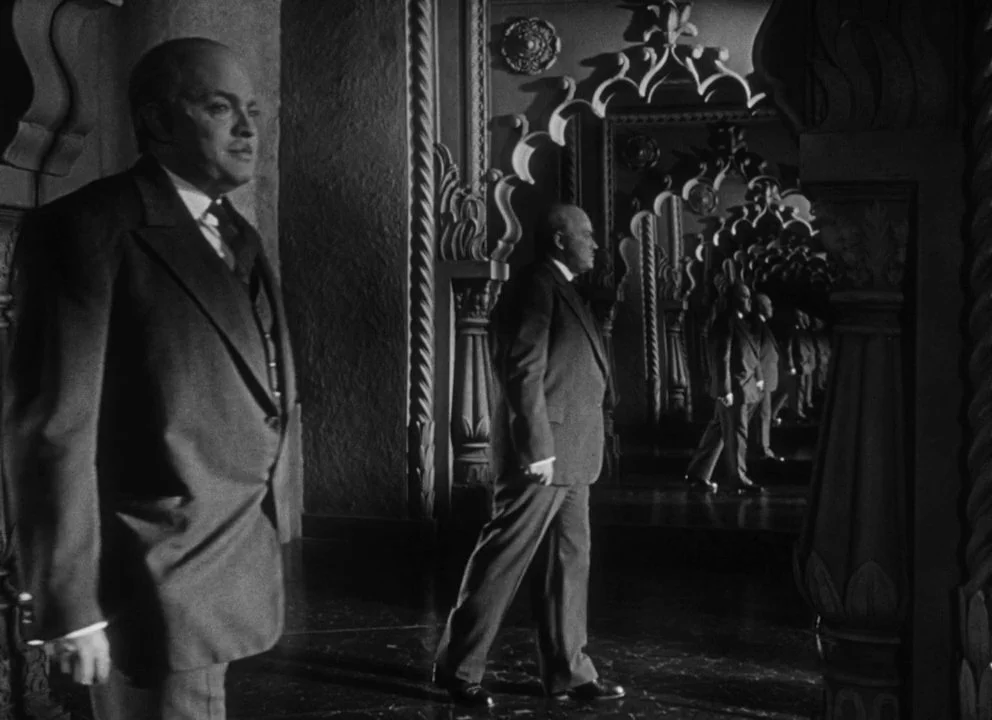
It’s something you come across in real-life situations, isn’t it? We’ve heard people justify the spousal abuse of men directed at their wives by saying “yeah, but he had a horrible childhood” or “he learned that from his abusive father”, and those may be reasons, they may be causes, but they are not excuses. They are adults, it is their responsibility to undo the sins of the past by learning from them and growing; ensuring the toxicity stops with them. Especially those men that have enormous privilege, like Kane.
So, in truth, Citizen Kane is a study of weak men. A study of those men that flippantly reach for excuses for their behaviour. A study of men that easily say “money and power corrupts” when a stronger person would use their privilege to make the world a better place. That it is a thinly-veiled criticism of William Rudolph Hearst, the Rupert Murdoch equivalent of his time, makes it all the more delicious. It also serves as a reminder that underneath the bluster and ‘strength’ of ultra-wealthy men who use their money to commit evil is a scared and weak little boy, too impotent to rise above the excuses handed to him on his silver spoon.
Turns out you can learn plenty from that black and white film from 1941.
Bo Nicholson is a co-founder at Punch & Pie Media, who is particularly thankful that Family Guy didn’t REALLY spoil Citizen Kane!