Strong performances anchor this shattering drama that dares to broach challenging subject matter from the perspective of an innocent child
© Kaplan Morrison
Films in 2026 rarely come more emotionally harrowing than Josephine, an account of rape as filtered through the perspective of an unsuspecting young girl who witnesses the event. The timeliness of the movie is especially noteworthy, lining up as it does with the fallout from the appalling 2024 Cornell University rape case. Indeed, a study of Josephine’s production backstory reveals that it was shot in early 2024 just before the events at Cornell; one wonders if real-world circumstances consciously shaped the overall tone and edit of the movie, not that the events on the American campus are an isolated incident.
Indeed, the great sadness of Josephine, or one of them at least, lies in reminding us of how commonplace such horrors have become, and the sheer emotional magnitude it takes to speak out against them. Even more disconcertingly, the movie actively interrogates the age at which young women ought to be exposed to cautionary warnings; the tragedy of this story is that the girl is a mere child, prematurely exposed to the peculiarly adult notions of sex, assault and coercion.
Illuminating the darkness of the film’s subject matter is an incandescent performance from newcomer Mason Reeves as the titular Josephine. It’s always heartening and enthralling to witness a potential new star in the making, but even by the standards of most memorable young performances, Reeves is remarkable. Clearly physically and emotionally intuitive, she is also empowered with the responsibility of navigating horrific subject matter that is tough even for adults to stomach. Full credit to writer-director Beth de Araújo, who clearly worked overtime, evidently with the help of assistants and emotional co-ordinators, to fashion an atmosphere of solidarity and safety in which Reeves and her fellow actors could perform.
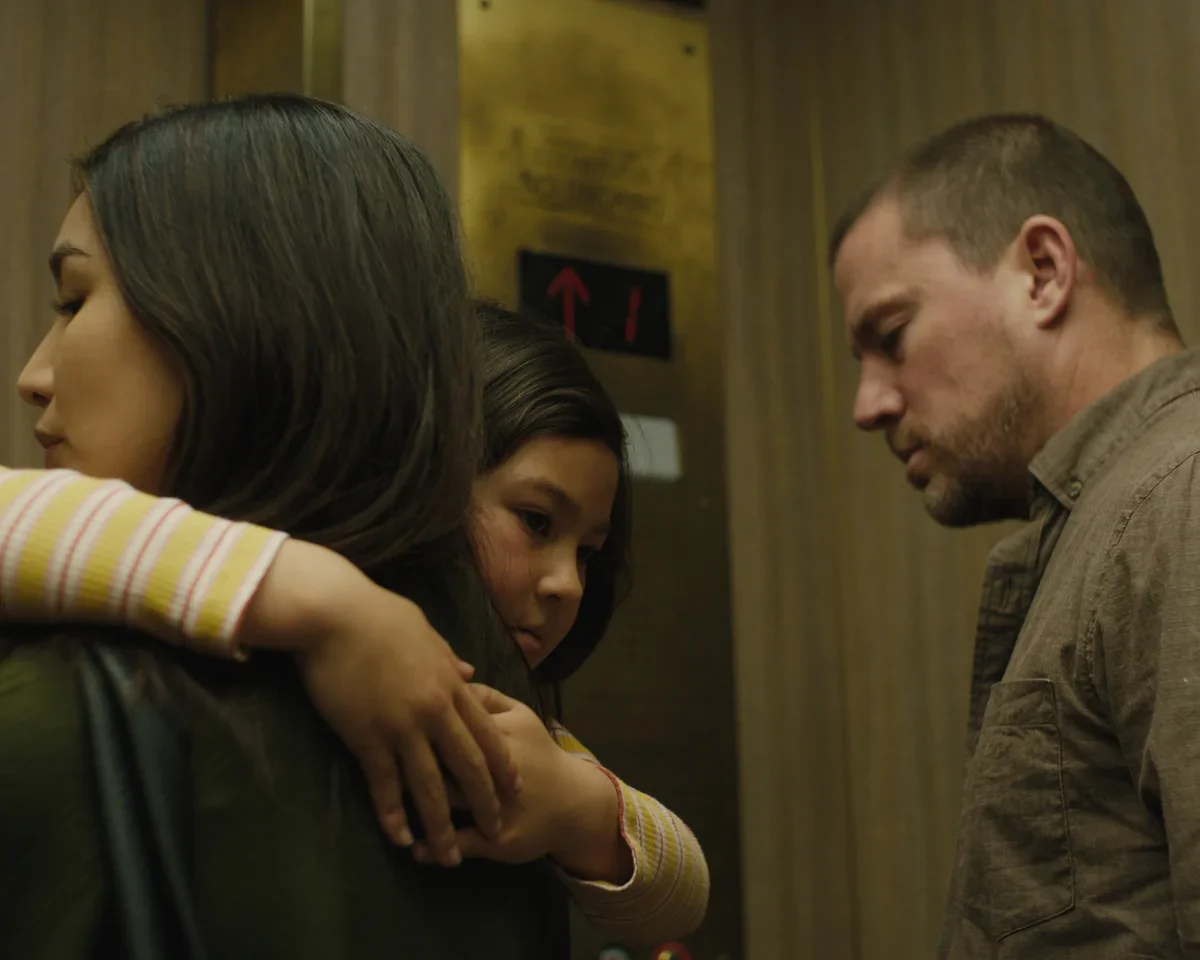
The movie pulls no punches from the outset. On a visit to her local San Francisco park with her uber-masculine father Damien (Channing Tatum), Josephine is witness to a soul-shattering sexual assault on a woman in broad daylight. Hiding behind a tree and inadvertently interrupting the rapist, Josephine is the only witness to the crime. De Araújo subsequently does a marvellous job of establishing the ensuing film as a largely subjective experience. In a blizzard of POV shots and disorienting edits, Josephine is placed in the back of a police car, supervised by unsympathetic officers, shares the back seat with the victim of the crime, and is compelled to point out the perpetrator, Greg (Philip Ettinger), when he is later arrested with her father's help.
The drama that follows is primarily one of legacy and psychological trauma, a bruise extending through the skein of normality. Josephine’s behaviour changes at school and becomes more violent: she becomes acquainted with the word ‘rape’, if not its specific meaning, and directs it at a boy in her sports class. She even questions her ballet dancer mother Claire (Gemma Chan), enquiring if she herself has been raped. The mixture of vague awareness mixed with a lack of nuanced understanding establishes palpable sympathy for Josephine’s plight, particularly when the two parents start to disagree on how to guide her through what has happened. Should she, as Damien encourages, join a self-defence class and safeguard herself physically? Or is it better, as Claire advocates, to adopt a softly-softly catchy monkey approach and speak in gentle euphemistic terms about the terrors and brutalities visited on women the world over, every day?
The initial set-up can feel a bit schematic with its binary dialectics from the two parent figures. Flip-flopping between macho brashness and motherly warmth in the film’s opening section feels like an overly simplistic approach to complex subject matter, something that isn’t helped by overheated close-up camerawork that threatens to drag a sensitive story into ghoulish genre horror territory, possibly by design. This is reinforced by a stomach-sinking visual metaphor that is repeated throughout the movie with the aim of an emotional payoff come the end. Nevertheless, the film is brave enough to attain greater moral complexity as it proceeds toward the final act, one that exposes the fallibilities of the legal system when Josephine is required to testify in court, which in turn exposes her to disorienting blitheness by the rapist’s defence counsel. Elevating their characters from potential props in the script, Tatum and Chan are both excellent as the increasingly warring parents, communicating so much through a missed moment of eye contact or a thwarted hand hold.
The film honours a child’s innocence that is on a collision course with adult morality where good and bad are interwoven like a DNA helix. “How do I know if I’m bad?” the unsettled Josephine asks at one stage. For her, as a result of being in the wrong place at the wrong time, the world has already started to turn a shade of grey well before its time. In one of the film’s most devastating scenes, Claire does her level best to treat the subject with equanimity, reminding Josephine that she is not accountable for anything awful that happens to her, but that accountability alone won’t halt evil in its tracks. While also acting as a damning indictment of a status quo that places the onus on both victims and eyewitnesses, Josephine is also clear-eyed in how it honours the title character’s sense of moral bravery, even if she’s far too young to understand the ramifications of such things. If just a few people take inspiration from this make-believe character’s inchoate sense of decency, then the film becomes more than a film: a testament to the vitality of speaking out, at any age.
Rating: 4/5
Sean Wilson is a Film Critic based in Bristol, UK. If you enjoyed his review, please consider supporting him by subscribing to his substack or by purchasing his book The Sound of Cinema